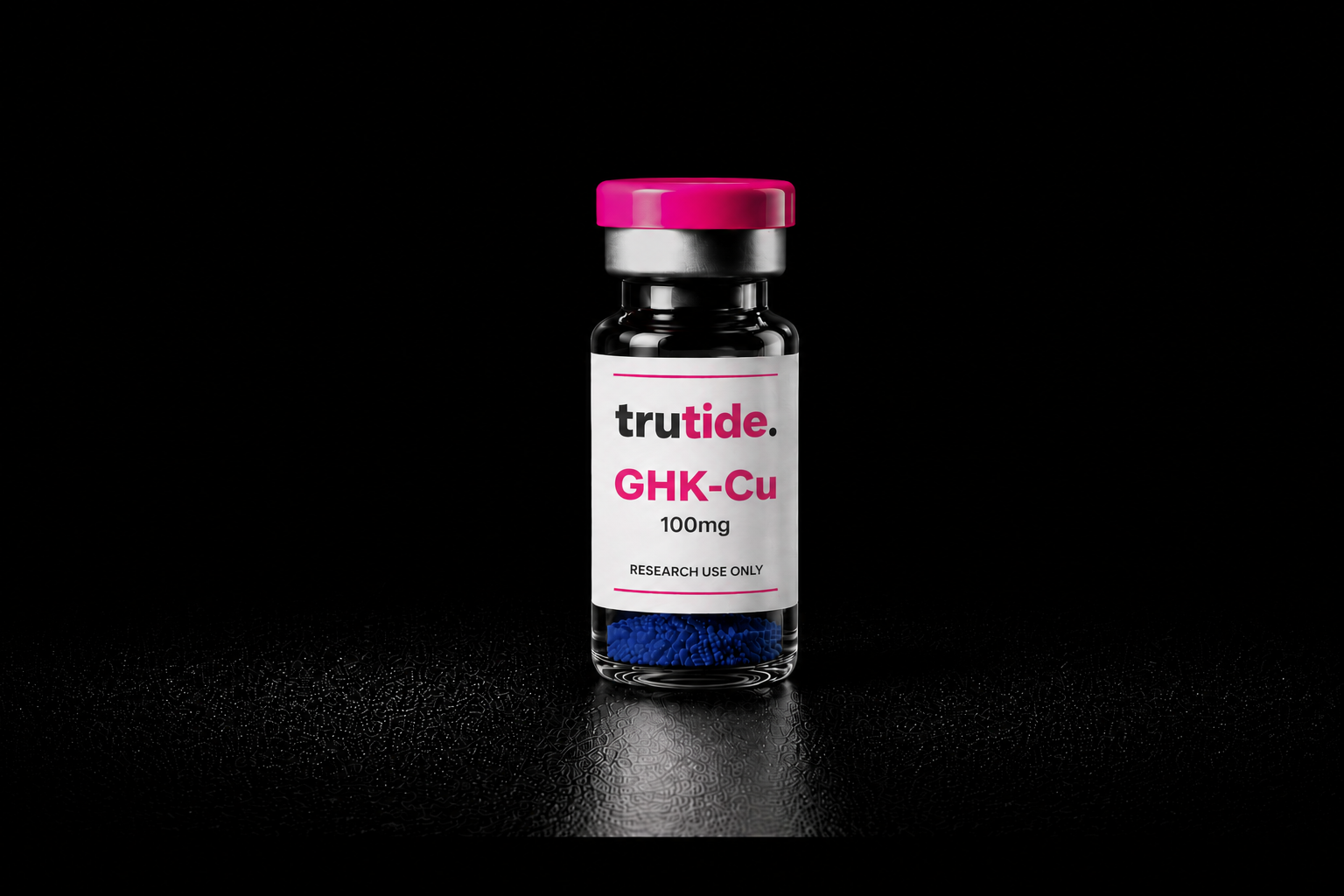
GHK-Cu is a naturally occurring copper-binding tripeptide complex used in experimental research examining copper-peptide chemistry, extracellular-matrix biology, gene-expression pathways, fibroblast cell models and oxidative-response mechanisms. This article summarises the relevant laboratory and preclinical literature for scientific reference.
GHK-Cu is a widely studied copper-binding tripeptide complex. For wider chemical context, see our guide on what are copper peptides.
Quick reference
| Property | Value |
|---|---|
| Compound class | Tripeptide-copper(II) complex |
| Sequence | Gly-L-His-L-Lys (GHK) |
| Molecular formula | C₁₄H₂₃CuN₆O₄ (copper complex) |
| Molecular weight | 402.9 g/mol (copper complex); 340.4 g/mol (free peptide) |
| CAS number | 89030-95-5 (copper complex); 49557-75-7 (free peptide) |
| Origin | Naturally occurring in human plasma, saliva, and urine |
| Form | Lyophilised blue powder |
| Storage | 2–8°C refrigerated; −20°C for long-term lyophilised storage; protect from light and moisture |
Introduction
GHK-Cu (copper tripeptide-1) is a naturally occurring peptide-copper complex consisting of three amino acids — glycine, L-histidine, and L-lysine — bound to a single copper(II) ion. The tripeptide sequence GHK was first identified in 1973 by Pickart and Thaler as a low-molecular-weight factor in human plasma that influenced gene expression in cultured hepatocytes. Subsequent work established that the biologically active form is the copper complex rather than the free peptide.
GHK-Cu occurs naturally in human plasma, saliva, and urine. Plasma concentrations decline significantly with age — from approximately 200 ng/mL at age 20 to approximately 80 ng/mL by age 60 — and this age-related decline has driven considerable research interest in the peptide’s role in age-associated changes to matrix and cellular response capacity, oxidative homeostasis, and extracellular matrix integrity.
Since its initial characterisation, GHK-Cu has been the subject of a large body of published research spanning dermal fibroblast biology, experimental wound models, gene expression modulation, antioxidant pathways, and angiogenesis. Mechanistic work has identified the copper coordination as central to its biological activity, with the bound copper serving as both a structural feature of the complex and a source of bioavailable copper for downstream copper-dependent enzymes.
Mechanism of action
GHK-Cu acts as a multimodal modulator across several biochemical pathways. Published research has identified distinct but overlapping mechanisms through which the compound exerts biological activity in preclinical models, with the copper coordination playing a central role in most documented effects.
Gene expression modulation
One of the most striking findings in the GHK-Cu literature is the breadth of its effect on gene transcription. A 2010 analysis by Pickart and colleagues using the Broad Institute’s Connectivity Map compared the transcriptional signature of GHK-Cu against more than 1,300 reference compounds, reporting significant modulation of an estimated 4,000 human genes — approximately one-third of the protein-coding genome (Pickart & Margolina, 2018). The genes affected cluster in functionally coherent groups: collagen and extracellular matrix components, antioxidant defence enzymes, DNA repair systems, ubiquitin-proteasome pathway components, and a range of cell signalling intermediates.
Extracellular matrix remodelling
GHK-Cu has been studied extensively as a modulator of dermal fibroblast activity and extracellular matrix composition. Published research has reported upregulation of genes encoding type I and type III collagen, elastin, glycosaminoglycans (including hyaluronic acid synthases), and small leucine-rich proteoglycans such as decorin and biglycan in cultured fibroblasts treated with GHK-Cu. The copper component is mechanistically central rather than incidental: copper is a required cofactor for lysyl oxidase, the enzyme responsible for the oxidative deamination of lysine residues that initiates collagen and elastin crosslinking.
Antioxidant pathway activity
Copper is the catalytic centre of cytosolic and extracellular superoxide dismutase (SOD1 and SOD3), enzymes that detoxify the superoxide radical generated by mitochondrial respiration and inflammatory cell activity. GHK-Cu has been studied as a delivery vehicle for catalytically relevant copper to these enzymes and as a direct modulator of cellular oxidative state. Published research has reported reductions in lipid peroxidation markers and increases in glutathione levels in cellular models treated with GHK-Cu (Pickart et al., 2012).
Angiogenesis-associated signalling
Published in vitro and animal studies have examined GHK-Cu alongside angiogenesis-associated endpoints, including VEGF/bFGF expression, endothelial-cell migration and vessel-density measurements. These observations are model-specific and should not be treated as established clinical effects.
Inflammatory-signalling modulation
Published research has examined GHK-Cu’s effect on inflammatory signalling, including reports of attenuation of TNF-α and interleukin signalling in cellular models, and modulation of NF-κB pathway activity. These findings have positioned GHK-Cu as a frequent subject of investigation in models where oxidative stress and chronic inflammation are central features.
Published research
GHK-Cu has been investigated across a broader range of research domains than most peptides of its size, reflecting the breadth of its effects on gene expression and the variety of tissues in which copper-dependent enzymes play a role. This section summarises the principal research areas. Researchers should note that preclinical findings do not necessarily translate to human outcomes and should consult the cited sources directly for full study details.
Dermatological research
The largest body of GHK-Cu research relates to skin biology — collagen synthesis, dermal thickness, barrier function, pigmentation, and the cellular changes associated with photoageing. Cultured human dermal fibroblasts treated with GHK-Cu show measurable changes in collagen output, matrix metalloproteinase expression, and gene transcription consistent with a younger fibroblast phenotype (Pickart et al., 2015). Research has appeared across dermatological and cosmetic science journals over several decades.
Experimental wound models
Preclinical studies have used GHK-Cu in animal wound-model systems. Reported endpoints include wound-closure measurements, vessel-density measurements, extracellular-matrix markers and tensile-strength measurements relative to control groups. These studies are part of the preclinical literature and do not establish a human therapeutic effect.
Hair follicle research
GHK-Cu has been studied in hair-follicle and dermal-papilla experimental systems. Published work reports measurements involving follicle morphology, anagen-associated markers, Wnt/β-catenin signalling and growth-factor expression.
Neuroscience and neurodegeneration
More recent research has examined GHK-Cu in neurological contexts, drawing on its antioxidant activity and its modulation of genes implicated in neurodegeneration. Published work has explored its effects on neuronal cell survival under oxidative stress and its potential role as a research tool in models of cognitive decline (Pickart et al., 2012).
Pulmonary research
Transcriptomic analyses have identified GHK-Cu as a candidate modulator of gene expression patterns associated with chronic obstructive pulmonary disease and emphysema in research models, with the proposed mechanism involving reversal of disease-associated transcriptional signatures.
Bone and connective tissue
GHK-Cu has also been examined in osteoblast, bone-matrix and connective-tissue experimental models, reflecting the role of copper-dependent enzymes and extracellular-matrix regulation in these systems.
Limitations of current evidence
While the GHK-Cu research base spans more than five decades, the majority of published findings come from in vitro studies and animal models. Human clinical research has focused largely on topical cosmetic applications rather than the broader range of systemic effects observed in preclinical work. A substantial portion of the foundational mechanistic literature originates from the research group led by Loren Pickart, though independent replication of key findings by unaffiliated research groups exists across the dermatological and experimental wound models literature. Researchers should interpret findings with this context in mind.
Research use only. This article is provided for laboratory and scientific reference purposes. Trutide research products are supplied strictly for in vitro laboratory research and are not for human or veterinary use, clinical use, self-administration, diagnosis, treatment or prevention of disease.
References
- Pickart L, Thaler MM. Tripeptide in human serum which prolongs survival of normal liver cells and stimulates growth in neoplastic liver. Nature New Biology. 1973;243(124):85-87.
- Pickart L, Margolina A. Regenerative and protective actions of the GHK-Cu peptide in the light of the new gene data. International Journal of Molecular Sciences. 2018;19(7):1987. doi:10.3390/ijms19071987
- Pickart L, Vasquez-Soltero JM, Margolina A. GHK peptide as a natural modulator of multiple cellular pathways in skin regeneration. BioMed Research International. 2015;2015:648108. doi:10.1155/2015/648108
- McCormack MC, Nowak KC, Koch RJ. Copper peptide GHK-Cu stimulates wound healing, angiogenesis, and hair follicle enlargement in animal models. Wound Repair and Regeneration. 2014;22(2):163-172. doi:10.1111/wrr.12137
- Pickart L, Vasquez-Soltero JM, Margolina A. The human tripeptide GHK-Cu in prevention of oxidative stress and degenerative conditions of aging: implications for cognitive health. Oxidative Medicine and Cellular Longevity. 2012;2012:324832. doi:10.1155/2012/324832
- Pickart L, Margolina A. The effect of the human peptide GHK on gene expression relevant to nervous system function and cognitive decline. Brain Sciences. 2017;7(2):20.
Last updated: 22 May 2026