Research Guides & Resources
Research documentation, peptide overviews, storage guidance, and analytical references.
Peptides 101: How to Store Peptides
Lyophilised research peptides are generally more stable than the same materials in solution, but storage conditions still matter.…
Read article →Peptides 101: What Are Peptides?
Peptides are one of the fundamental building blocks of biology, yet the word itself can sound more complicated…
Read article →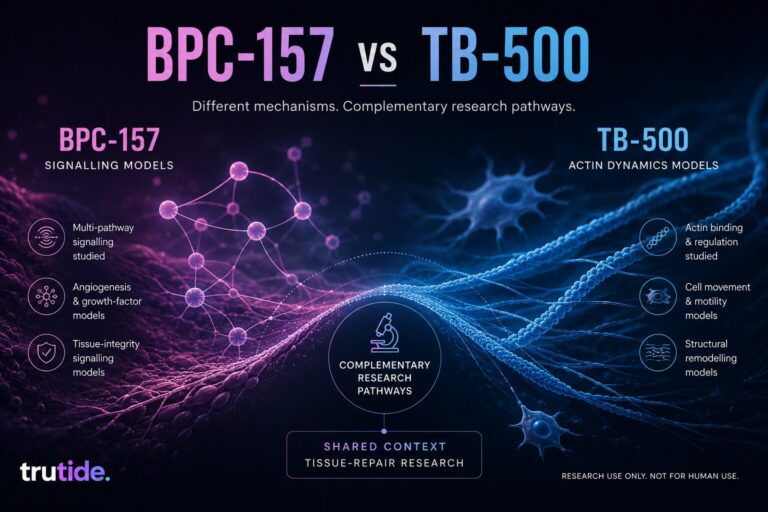
BPC-157 vs TB-500
BPC-157 and TB-500 are structurally distinct research peptides with different molecular targets and experimental literature. This comparison focuses…
Read article →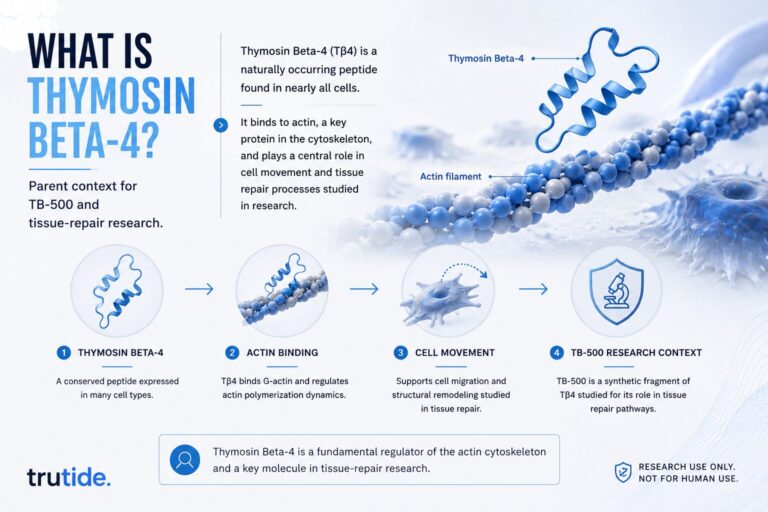
What Is Thymosin Beta-4?
Thymosin beta-4 (TB-4) is one of the most abundant proteins inside mammalian cells and a molecule of wide-ranging…
Read article →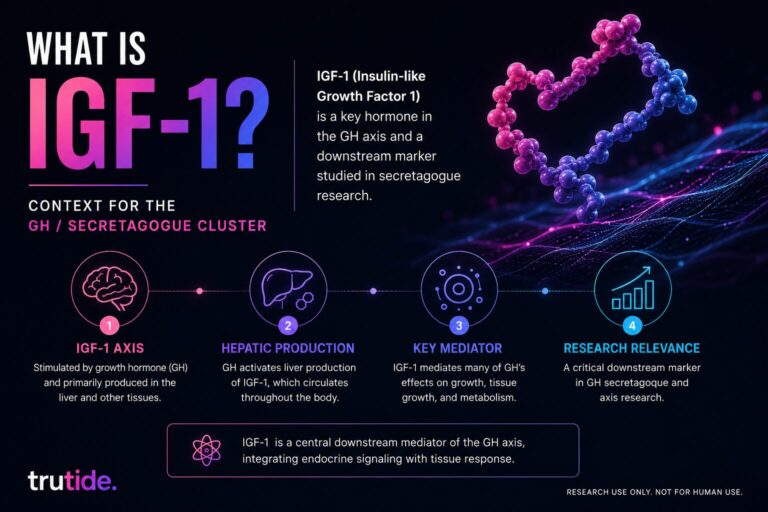
What Is IGF-1?
Insulin-like growth factor 1 (IGF-1) is a hormone that mediates many of the downstream effects of growth hormone,…
Read article →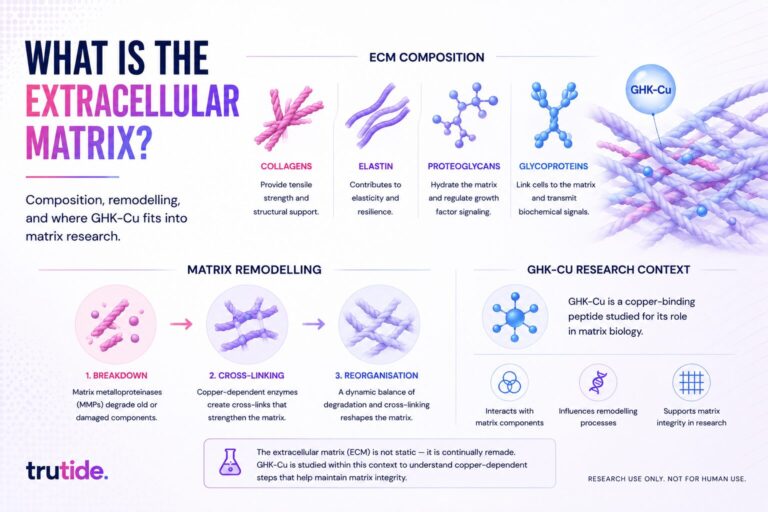
What Is the Extracellular Matrix?
The extracellular matrix (ECM) is the structural network that surrounds and supports cells in tissue — the scaffolding…
Read article →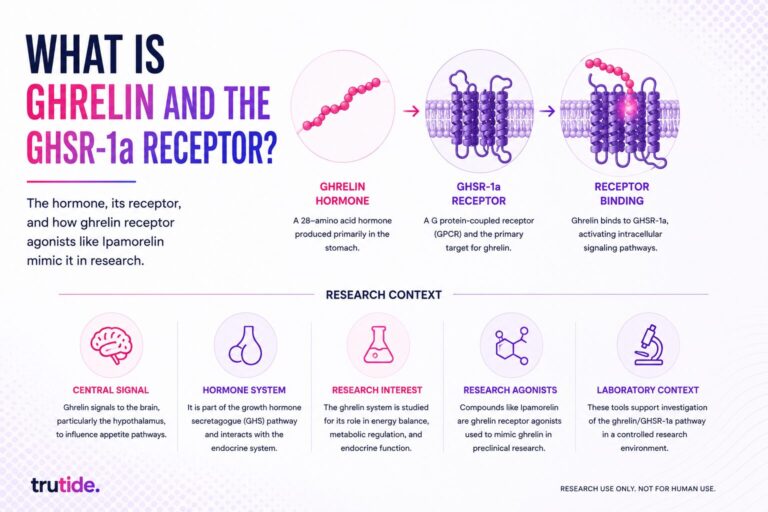
What Is Ghrelin and the GHSR-1a Receptor?
Ghrelin is a hormone best known for its role in appetite signalling, but in the context of peptide…
Read article →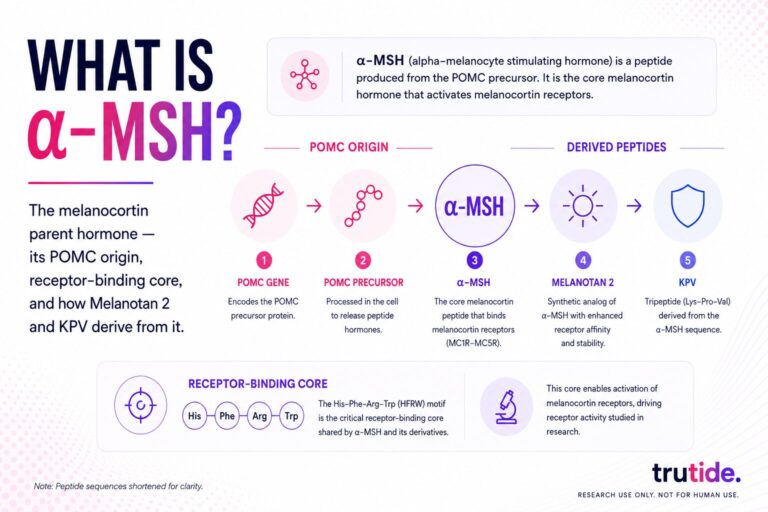
What Is alpha-msh?
α-melanocyte-stimulating hormone (alpha-MSH) is a peptide hormone at the centre of the melanocortin system — the signalling network…
Read article →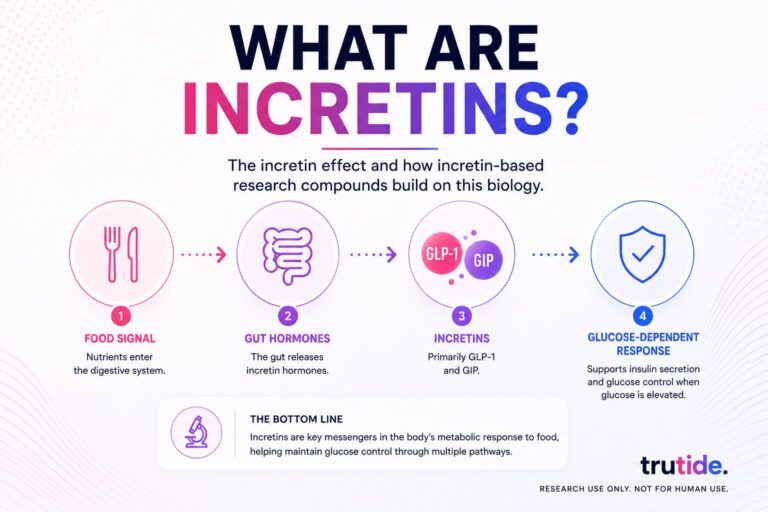
What Are Incretins?
Incretins are hormones released from the gut in response to food that regulate blood glucose, primarily by stimulating…
Read article →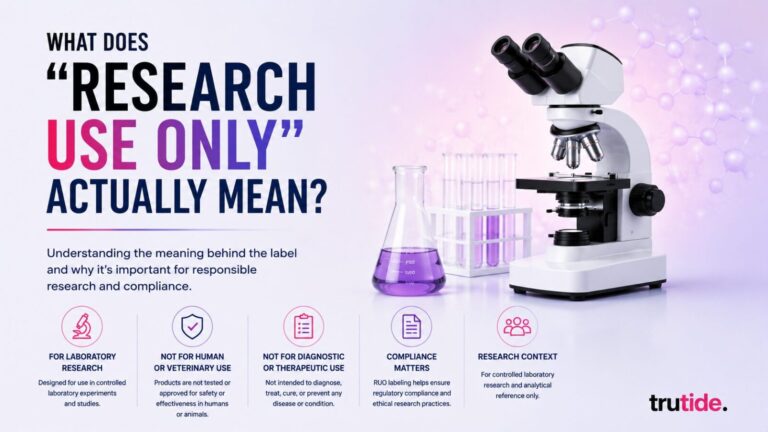
What Does “Research Use Only” Actually Mean?
Research Use Only (RUO) is an intended-use statement used for materials supplied for laboratory and scientific investigation rather…
Read article →