Research Guides & Resources
Research documentation, peptide overviews, storage guidance, and analytical references.
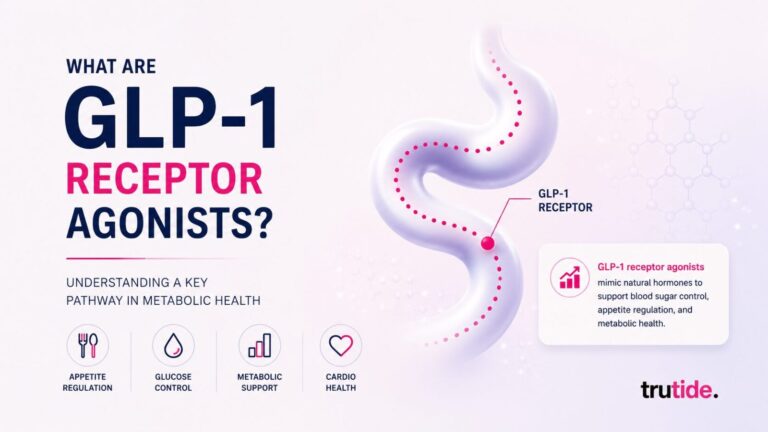
What Are GLP-1 Receptor Agonists?
GLP-1 receptor agonists are compounds that activate the glucagon-like peptide-1 (GLP-1) receptor, mimicking the action of one of…
Read article →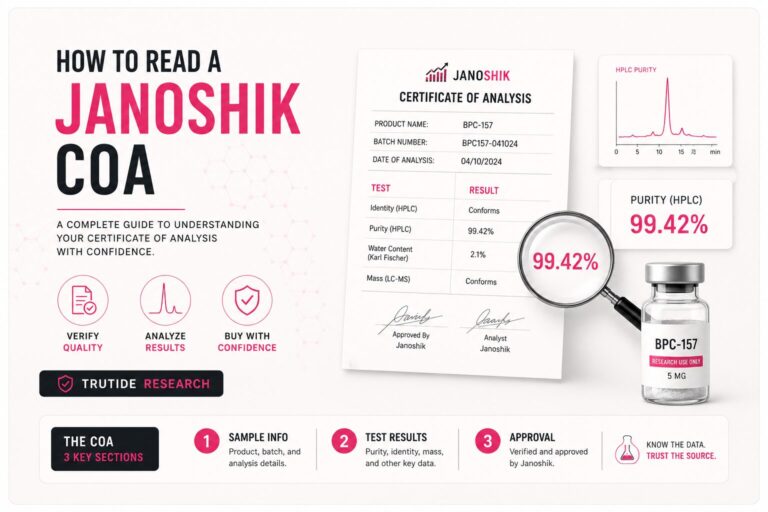
How to Read a Janoshik COA
A Certificate of Analysis (COA) can help researchers review analytical data associated with a specified sample or batch.…
Read article →
What Is A Pentadecapeptide?
A pentadecapeptide is a peptide composed of fifteen amino acids. The term combines the Greek “penta-deca” (fifteen) with…
Read article →
What Are Growth Hormone Secretagogues?
Growth hormone secretagogues (GHS) are a class of compounds that stimulate the body’s own release of growth hormone…
Read article →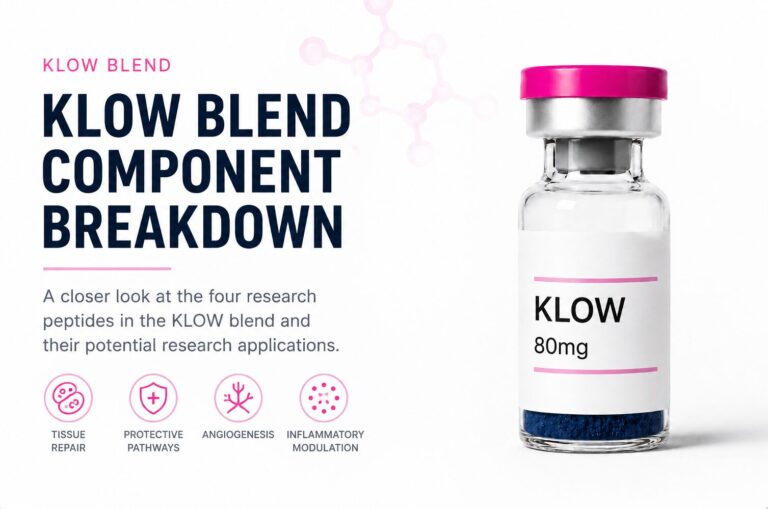
KLOW Blend: Component Breakdown
KLOW Blend contains four research peptides in a fixed formulation: GHK-Cu, BPC-157, TB-500 and KPV. This component breakdown…
Read article →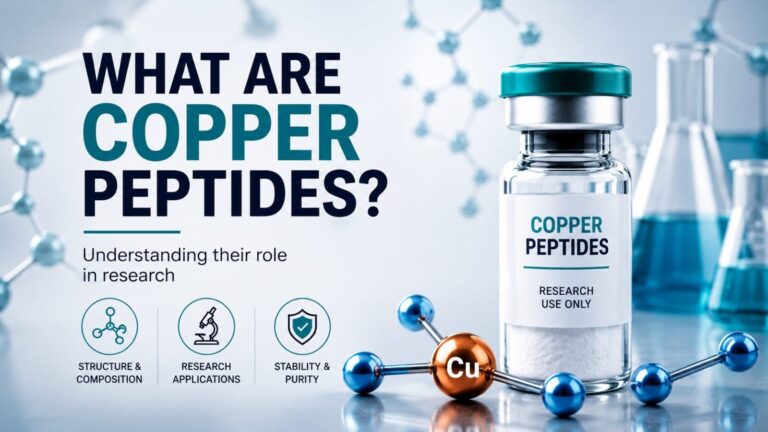
What Are Copper Peptides?
Copper peptides are a class of short peptides that bind copper ions to form a biologically active complex.…
Read article →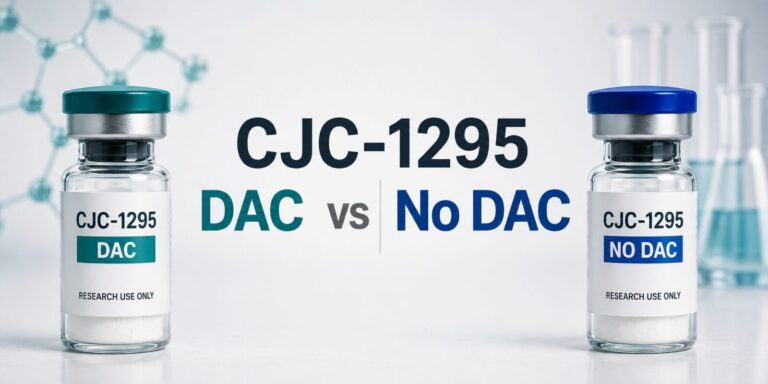
CJC-1295 DAC vs No DAC: What’s the Difference?
CJC-1295 is available in two distinct forms that are frequently confused: CJC-1295 with DAC (Drug Affinity Complex) and…
Read article →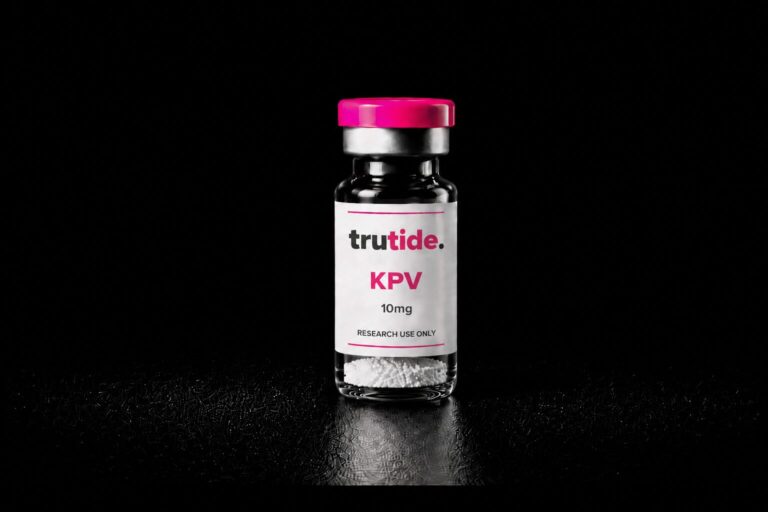
KPV: A Research Overview
KPV (Lys-Pro-Val) is a tripeptide derived from the C-terminal region of α-melanocyte-stimulating hormone (α-MSH). It is used in…
Read article →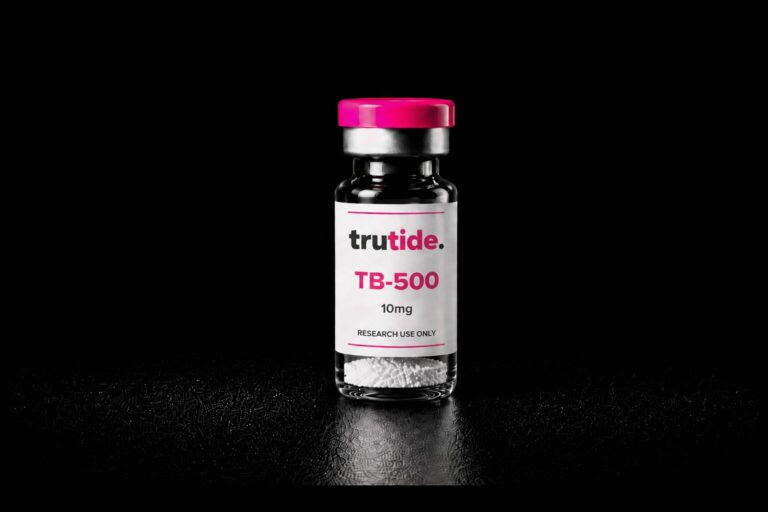
TB-500: A Research Overview
TB-500 is a synthetic peptide fragment derived from thymosin beta-4 and used in experimental research examining actin-associated processes,…
Read article →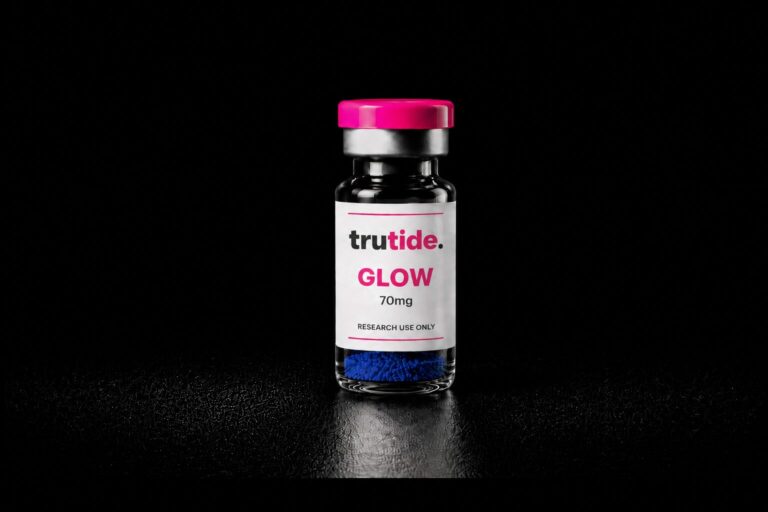
GLOW Blend: A Research Overview
GLOW Blend is a three-component research formulation containing GHK-Cu, BPC-157 and TB-500. The component peptides appear in experimental…
Read article →