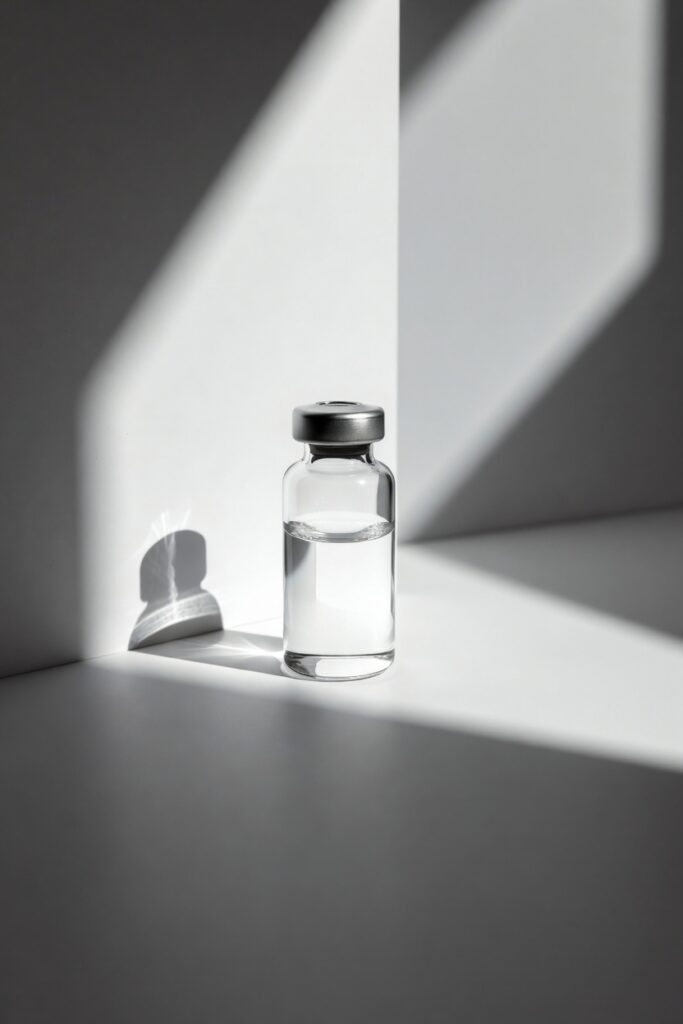
What is bacteriostatic water?
Bacteriostatic water (BAC water) is sterile water for injection that contains 0.9% benzyl alcohol as a preservative. The benzyl alcohol inhibits the growth of bacteria and other microorganisms, preventing contamination of the solution over multiple uses. This distinguishes it from standard sterile water for injection, which contains no preservative and is intended for single use only.
Why is bacteriostatic water used in peptide research?
Bacteriostatic water is the most widely used solvent for reconstituting research peptides for several reasons. First, it is compatible with the vast majority of research peptides and does not cause degradation or precipitation at typical working concentrations. Second, the benzyl alcohol preservative extends the usable life of the reconstituted solution when stored at 4°C, typically allowing use for up to 28 days after reconstitution. Third, it is available in a sterile, pharmaceutical-grade form that minimises the risk of introducing contaminants into sensitive research preparations.
Bacteriostatic water versus sterile water
The key practical difference between bacteriostatic water and plain sterile water is the preservative. Once opened, a vial of plain sterile water should be used immediately and any remainder discarded, as there is no protection against microbial growth. Bacteriostatic water, by contrast, can be accessed multiple times over an extended period without significant risk of contamination, making it far more practical for laboratory use where small volumes are drawn from a vial repeatedly.
Bacteriostatic water versus normal saline
Normal saline (0.9% sodium chloride solution) is another solvent sometimes considered for peptide reconstitution. However, saline is generally not preferred for research peptides as the salt content can affect peptide solubility and stability, and standard saline for injection typically contains no preservative. Bacteriostatic saline (saline with benzyl alcohol) is used in some clinical contexts but BAC water remains the standard choice for research peptide reconstitution.
How much bacteriostatic water should be used?
The volume of bacteriostatic water added to a peptide vial determines the concentration of the resulting solution. There is no single correct answer — the appropriate volume depends on the peptide, the research protocol, and the concentrations required. A common approach is to add a volume that results in a round-number concentration for ease of calculation. For example, adding 1ml of BAC water to a 5mg vial yields a 5mg/ml solution; adding 2ml yields 2.5mg/ml.
Storage of bacteriostatic water
Unopened vials of bacteriostatic water should be stored at room temperature, away from direct light. Once opened, vials should be stored at room temperature or refrigerated at 4°C and used within 28 days. As with all laboratory reagents, vials should be inspected before use — do not use if the solution appears cloudy, discoloured, or if particulates are visible.
Important notes
Bacteriostatic water supplied by Trutide is intended for use as a solvent in in vitro laboratory research only. It is not for human or veterinary use. Researchers should follow all applicable institutional guidelines and safety protocols when handling laboratory solvents and research compounds.