What is lyophilisation?
Lyophilisation, commonly known as freeze-drying, is a dehydration process used to improve the storage stability of biological and chemical research materials. This guide explains the process, why lyophilised formats are widely used for peptides and other sensitive compounds, and the general considerations relevant to dry-material storage.
Why are research peptides supplied as lyophilised powder?
Lyophilisation removes water that can contribute to hydrolysis and other degradation pathways, improving stability during storage when compared with the same material in aqueous solution.
Advantages of lyophilised peptides
- Extended shelf life — significantly more stable than peptides in solution
- Ease of shipping — dry powder is less sensitive to temperature fluctuations during transit
- Structural integrity — properly lyophilised peptides retain their chemical structure and biological activity
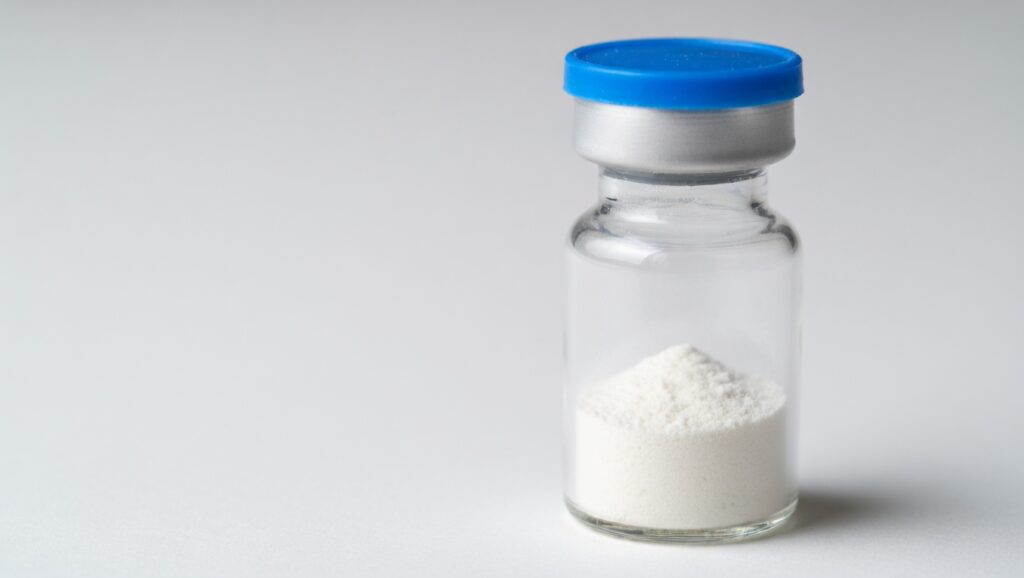
What does lyophilised peptide look like?
Lyophilised peptides typically appear as a white or off-white powder, or occasionally as a fluffy cake-like solid. Some peptides may appear slightly off-white or cream coloured depending on their amino acid composition. The powder should be dry and free-flowing when the vial is gently tapped. Any discolouration, clumping, or unusual appearance should be noted and the Certificate of Analysis consulted.
Storage of lyophilised peptides
Store lyophilised research material refrigerated at 2–8°C. For long-term storage, store frozen at −20°C. Keep sealed and protected from light and moisture. Where compound-specific stability data or a validated laboratory SOP specifies different conditions, follow that documented method.
The lyophilisation process in brief
Industrial lyophilisation involves three primary stages. First, the peptide solution is frozen at very low temperatures, typically between −40°C and −80°C. Second, primary drying removes the bulk of the frozen water through sublimation under reduced pressure. Third, secondary drying removes any remaining bound water molecules through adsorption at slightly elevated temperatures, typically resulting in a final moisture content below 1%.
All Trutide research peptides are supplied as lyophilised powder and are intended for in vitro laboratory research only.
Research use only. This article is provided for laboratory and scientific reference purposes. Trutide research products are supplied strictly for in vitro laboratory research and are not for human or veterinary use, clinical use, self-administration, diagnosis, treatment or prevention of disease.