Age Verification

This website sells research chemicals for in vitro laboratory use only. You must be 18 or over to enter. By entering you confirm you are a qualified researcher and agree to our Terms & Conditions.

Sorry, you must be 18 or over to access this site.

For research use only. Not for human consumption.

📦 £5.99 Royal Mail Tracked 24 on every order — same-day dispatch on orders before 2pm

Research use only. All products are sold strictly for in vitro laboratory and scientific research. Not for human or veterinary use.

Home Research Library BPC-157: A Research Overview

BPC-157: A Research Overview

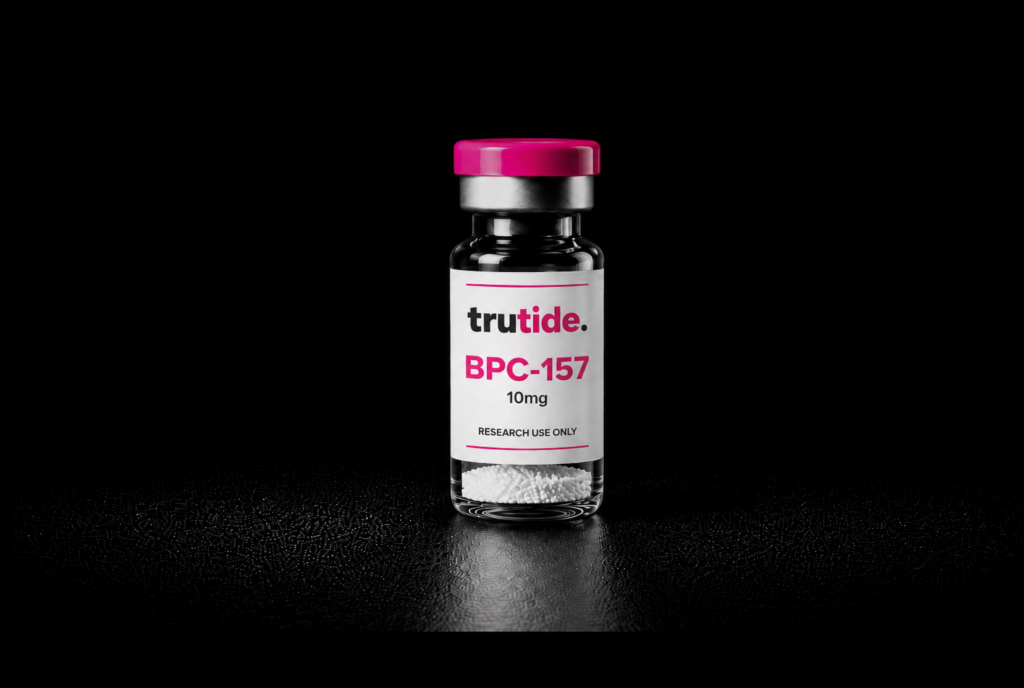
BPC-157 research peptide lyophilised powder vial

BPC-157 is one of the most extensively studied research peptides in preclinical science. A synthetic pentadecapeptide derived from a protective protein found in human gastric juice, it has generated a substantial body of published research investigating its effects on tissue repair, angiogenesis, and nitric oxide signalling pathways. Unlike the incretin-class peptides that dominate current metabolic research, BPC-157 occupies a distinct niche — its published research base spans wound healing, tendon and ligament repair, gastrointestinal protection, and vascular function. This guide is a working reference for laboratory researchers: structure and specifications, mechanism of action, key published studies, handling protocols, and quality considerations when sourcing research-grade material.

Quick reference

PropertyValue
Compound classPentadecapeptide (15 amino acids)
SequenceGly-Glu-Pro-Pro-Pro-Gly-Lys-Pro-Ala-Asp-Asp-Ala-Gly-Leu-Val
Molecular formulaC₆₂H₉₈N₁₆O₂₂
Molecular weight1419.53 g/mol
CAS number137525-51-0
OriginSynthetic fragment of human gastric juice protein BPC
FormLyophilised white powder
SolubilitySoluble in bacteriostatic water after reconstitution
Storage−20°C, protected from light and moisture

Trutide supplies research-grade BPC-157 at ≥98% HPLC purity, independently tested by Janoshik Analytical. View product details →


Introduction

BPC-157 (Body Protection Compound-157) is a synthetic pentadecapeptide consisting of 15 amino acids. It is derived from a sequence found within a larger protective protein naturally present in human gastric juice. The compound does not occur naturally in its isolated 15-amino-acid form — it is a synthetic fragment selected for research purposes based on observed biological activity in preclinical studies.

Since its initial characterisation in the 1990s, BPC-157 has been the subject of a large body of published preclinical research. The majority of this evidence comes from animal models and in vitro studies, with no completed phase 3 clinical trials in humans at the time of writing. Despite this, the breadth of preclinical findings — spanning tissue repair, gastrointestinal cytoprotection, angiogenesis, and nitric oxide modulation — has made BPC-157 one of the most widely discussed research peptides in the scientific literature.

This research guide provides a comprehensive reference for laboratory researchers working with BPC-157. It covers the compound’s proposed mechanisms of action, published research findings across multiple tissue systems, pharmacokinetic considerations, handling requirements, and quality considerations relevant to in vitro and preclinical investigation.


Mechanism of action

BPC-157’s mechanism of action is not fully characterised at the molecular level, which is common for peptides with pleiotropic effects across multiple tissue systems. Published research has identified several pathways through which the compound appears to exert biological activity in preclinical models.

Nitric oxide system modulation

Published research has identified the nitric oxide (NO) system as a central mediator of BPC-157’s effects. Studies have reported that BPC-157 modulates nitric oxide synthase (NOS) activity in multiple tissue contexts — upregulating NO production in some settings (such as vascular endothelium) and modulating it in others (such as inflammatory contexts). The compound appears to interact with the NO system bidirectionally, which may explain its observed effects across diverse tissue types (Sikiric et al., 2018).

Angiogenesis and vascular effects

A consistent finding in published BPC-157 research is the promotion of angiogenesis — the formation of new blood vessels from existing vasculature. In vitro and in vivo studies have reported increased expression of vascular endothelial growth factor (VEGF) and its receptor VEGFR2 in the presence of BPC-157. Enhanced angiogenesis has been proposed as a key mechanism underlying the compound’s observed effects on wound healing and tissue repair in animal models.

Growth factor pathway interaction

Preclinical research has reported interactions between BPC-157 and several growth factor signalling pathways relevant to tissue repair, including fibroblast growth factor (FGF), epidermal growth factor (EGF), and transforming growth factor beta (TGF-β). The compound has been reported to upregulate growth hormone receptor expression in some tissue contexts, though the specificity and consistency of these interactions remains an active area of investigation.

FAK-paxillin pathway

More recent published research has identified the focal adhesion kinase (FAK) and paxillin signalling pathway as a potential mediator of BPC-157’s effects on cell migration and tissue remodelling. FAK-paxillin signalling is involved in cell adhesion, migration, and survival — processes central to wound healing and connective tissue repair. Studies have reported that BPC-157 promotes FAK-paxillin pathway activation in tendon fibroblasts and other cell types relevant to musculoskeletal repair.

Gastrointestinal cytoprotection

As a fragment derived from a gastric juice protein, BPC-157 has been studied extensively in gastrointestinal models. Published research has reported cytoprotective effects in gastric ulcer, intestinal damage, and inflammatory bowel models in animals. The proposed mechanisms include mucosal defence enhancement, prostaglandin system modulation, and interaction with the dopamine and serotonin systems in the gut.


Published research

BPC-157 has an unusually large preclinical research base for a peptide that has not yet completed phase 3 clinical trials. The majority of published findings come from animal models (primarily rodent) and in vitro cell culture studies. This section summarises key research areas. Researchers should note that preclinical findings do not necessarily translate to human outcomes and should consult the cited sources directly for full study details.

Tendon and ligament repair

One of the most extensively studied applications of BPC-157 is in musculoskeletal tissue repair. Published studies in rodent models have reported accelerated healing of transected Achilles tendons (Chang et al., 2011), medial collateral ligaments, and rotator cuff injuries. The proposed mechanisms involve enhanced collagen organisation, increased fibroblast proliferation, and promotion of angiogenesis at the repair site.

Research published in the Journal of Orthopaedic Research and Journal of Physiology and Pharmacology has examined dose-response relationships and time-course effects of BPC-157 on tendon healing parameters in controlled animal studies.

Wound healing

Published research has reported accelerated wound closure in multiple animal wound models, including incisional wounds, burn injuries, and diabetic wound models. Studies have observed increased granulation tissue formation, accelerated epithelialisation, and enhanced angiogenesis in BPC-157-treated wounds compared to controls.

Gastrointestinal research

Consistent with its origin as a gastric juice protein fragment, BPC-157 has been studied in numerous gastrointestinal damage models. Published research reports cytoprotective effects in ethanol-induced gastric lesions, NSAID-induced intestinal damage, inflammatory bowel disease models, and anastomotic healing models. Sikiric and colleagues have published extensively in this area, with studies appearing in journals including Life Sciences, Journal of Physiology and Pharmacology, and Current Medicinal Chemistry (Sikiric et al., 2018; Sikiric et al., 2014).

Vascular research

Published studies have investigated BPC-157’s effects on vascular function, reporting promotion of vessel formation in ischaemic tissues and modulation of blood pressure through nitric oxide-dependent mechanisms. Research in rat models has demonstrated effects on both arterial and venous systems, with observed improvements in blood flow to damaged tissues following BPC-157 administration.

Neuroprotection research

A smaller but growing body of preclinical literature has examined BPC-157’s effects in neurological models. Published studies have reported neuroprotective effects in traumatic brain injury models, peripheral nerve crush injuries, and spinal cord injury models in rodents. The proposed mechanisms involve nitric oxide modulation, angiogenesis at nerve repair sites, and potential interaction with the GABAergic system.

Limitations of current evidence

It is important to note that the BPC-157 research base, while extensive, is almost entirely preclinical. The compound has not completed phase 3 clinical trials in humans, and the majority of published research comes from a relatively small number of research groups — most notably the group led by Predrag Sikiric at the University of Zagreb. Independent replication of findings by unaffiliated research groups is growing but remains limited compared to the breadth of claims in the published literature. Researchers should interpret findings with this context in mind.


Pharmacokinetics

The pharmacokinetic profile of BPC-157 is less well-characterised than that of larger, albumin-binding peptides like tirzepatide or retatrutide. As a small pentadecapeptide without a fatty acid modification, its kinetic behaviour in research models differs substantially.

Stability

One of BPC-157’s notable properties in published research is its reported stability in gastric juice and other acidic environments — unusual for a peptide of its size. Studies have demonstrated that BPC-157 maintains biological activity after prolonged exposure to conditions that would degrade most peptides, which is consistent with its origin as a fragment of a gastric protection protein.

Absorption and distribution

Published animal studies have examined both subcutaneous and oral administration routes. Unlike most peptides, BPC-157 has shown biological activity via oral administration in multiple preclinical models — again consistent with its gastric origin and acid stability. Detailed pharmacokinetic parameters (Cmax, Tmax, AUC, bioavailability) have not been comprehensively published in peer-reviewed literature at the time of writing.

Half-life

Formal half-life determination in published peer-reviewed studies is limited. As a small peptide without albumin-binding modifications, BPC-157’s plasma half-life is expected to be short (minutes to hours) compared to fatty-acylated peptides like tirzepatide (~5 days) or retatrutide (~6 days). Published research protocols have typically used once-daily or twice-daily dosing in animal models, consistent with a shorter duration of action.

Dosing in research

Published animal studies have used a wide range of doses, typically reported as micrograms per kilogram of body weight. Common preclinical doses in the published literature range from 10 μg/kg to 50 μg/kg administered subcutaneously or intraperitoneally in rodent models. Researchers should follow their own institutional protocols and study designs when working with the compound.


Handling and storage

Proper handling is critical to preserving BPC-157’s integrity and ensuring reproducibility in research applications.

Lyophilised storage

Trutide supplies BPC-157 as a lyophilised white powder in sealed vials. Unopened vials should be stored at −20°C in a dry, dark environment protected from light and moisture. When stored correctly, the lyophilised powder is stable for up to 24-36 months.

Allow vials to equilibrate to room temperature before opening to prevent moisture condensation on the powder, which can compromise stability.

Reconstitution

BPC-157 is reconstituted using sterile bacteriostatic water (BAC water) containing 0.9% benzyl alcohol as a preservative. The benzyl alcohol extends usable life of the reconstituted solution while inhibiting microbial growth.

Standard reconstitution protocol:

  1. Allow vials of BPC-157 and BAC water to reach room temperature.
  2. Add 1-2 mL of BAC water slowly along the side of the vial to achieve the desired concentration.
  3. Gently swirl or tilt the vial until the powder is fully dissolved. Do not shake vigorously, as this can cause foaming or peptide degradation.
  4. Once reconstituted, the solution should be clear and colourless.

For more detail on reconstitution best practice, see our guide on how to reconstitute research peptides.

Reconstituted storage

Once reconstituted, BPC-157 solutions should be stored at 2-8°C (refrigerated) and used within 28 days. Do not refreeze reconstituted solutions, as freeze-thaw cycles can compromise peptide integrity.

Handling notes

  • Always work in a sterile environment using aseptic technique
  • Avoid repeated freeze-thaw cycles with the lyophilised powder
  • Protect from direct light and excessive heat during experimental procedures
  • Discard any unused solution that becomes cloudy or contains visible particulates
  • Follow your laboratory’s standard operating procedures for handling research peptides

For comprehensive guidance on peptide storage protocols, see how to store research peptides correctly.


Quality considerations in research

The reliability of research findings using BPC-157 depends substantially on the purity and integrity of the compound used. This is particularly important for BPC-157 because its small size (15 amino acids) means synthesis-related impurities can include sequences with only minor deletions or substitutions that may still show partial biological activity — confounding experimental results.

Purity verification

Trutide’s BPC-157 is independently tested at ≥98% purity minimum by HPLC analysis. Every batch undergoes:

  • High-performance liquid chromatography (HPLC) to quantify purity by separating the target peptide from synthesis-related impurities, truncated sequences, and degradation products
  • Mass spectrometry to confirm sequence identity by matching the measured molecular weight against the theoretical value (1419.53 g/mol)

For a fuller explanation of HPLC purity testing methodology, see our guide on understanding peptide purity.

Certificate of Analysis

Every batch of Trutide BPC-157 is supplied with a batch-specific Certificate of Analysis (COA) documenting:

  • HPLC purity percentage
  • Mass spectrometry sequence confirmation
  • Batch number and synthesis date
  • Independent third-party laboratory verification (Janoshik Analytical)

To learn more about what a COA contains and why it matters, see our guide on what is a Certificate of Analysis.

Acetate vs free-base form

BPC-157 is commonly supplied in two forms: the acetate salt form and the free-base (sodium) form. The acetate form is the most widely used in published research and is the form supplied by Trutide. Researchers should note which form is specified in their protocols, as the salt form affects the effective peptide content by weight — the acetate counterion contributes to total mass without contributing to biological activity.


How BPC-157 compares to TB-500

BPC-157 and TB-500 (Thymosin Beta-4 fragment) are frequently discussed together in research contexts because both peptides have been studied for tissue repair and healing effects. However, they operate through distinct mechanisms and have different research profiles.

BPC-157 is a gastric juice protein fragment with primary published research in angiogenesis, nitric oxide modulation, and gastrointestinal cytoprotection. TB-500 is a fragment of thymosin beta-4, an actin-binding protein, with published research focused on cell migration, actin polymerisation, and anti-inflammatory effects.

The two compounds target different aspects of the tissue repair process. Published research suggests BPC-157 primarily promotes blood vessel formation and growth factor signalling at injury sites, while TB-500 primarily facilitates cell migration to injury sites and modulates the inflammatory response. Some published preclinical research has examined the two compounds in combination, though this evidence base remains small.

BPC-157 is also available as part of the KLOW multi-peptide blend, combined with GHK-Cu, TB-500, and KPV for coordinated tissue repair research. See our KLOW research overview.


Frequently asked questions

What is BPC-157?

BPC-157 (Body Protection Compound-157) is a synthetic pentadecapeptide consisting of 15 amino acids. It is derived from a sequence found within a larger protective protein naturally present in human gastric juice. It is widely studied in preclinical research for its reported effects on tissue repair, angiogenesis, and gastrointestinal cytoprotection.

What is the molecular formula of BPC-157?

BPC-157 has the molecular formula C₆₂H₉₈N₁₆O₂₂, with a molecular weight of approximately 1419.53 g/mol. Its CAS number is 137525-51-0.

What is BPC-157 used for in research?

Published preclinical research has investigated BPC-157 in contexts including tendon and ligament repair, wound healing, gastrointestinal protection, vascular function, and neuroprotection. The majority of evidence comes from animal models and in vitro studies.

Has BPC-157 been tested in humans?

BPC-157 has not completed phase 3 clinical trials in humans at the time of writing. The majority of published research is preclinical (animal models and in vitro studies). Some early-phase human research has been conducted, but the evidence base is overwhelmingly preclinical.

How is BPC-157 different from TB-500?

BPC-157 is a gastric juice protein fragment primarily studied for angiogenesis and nitric oxide modulation. TB-500 is a thymosin beta-4 fragment primarily studied for cell migration and actin polymerisation. Both are investigated in tissue repair research but operate through distinct mechanisms.

How should BPC-157 be reconstituted?

BPC-157 is reconstituted using sterile bacteriostatic water (BAC water). Add 1-2 mL of BAC water slowly along the side of the vial to achieve the desired concentration. Swirl gently to dissolve — do not shake vigorously.

How should BPC-157 be stored?

Lyophilised BPC-157 should be stored at −20°C, protected from light and moisture. Reconstituted solutions should be stored at 2-8°C and used within 28 days. Do not refreeze reconstituted material.

What purity grade is required for research?

Research-grade BPC-157 should be ≥98% pure as verified by HPLC analysis, with mass spectrometry confirmation of sequence identity. Trutide’s BPC-157 meets these standards and is supplied with a batch-specific Certificate of Analysis from Janoshik Analytical.

What is the difference between acetate and free-base BPC-157?

BPC-157 acetate includes an acetate salt counterion, while the free-base (sodium) form does not. The acetate form is the most widely used in published research and is the form supplied by Trutide. The salt form affects effective peptide content by weight but not the peptide’s biological properties.

Can BPC-157 be used in humans?

No. BPC-157 supplied by Trutide is intended strictly for in vitro laboratory and scientific research. It is not for human or veterinary consumption, clinical use, or self-administration.

Is BPC-157 legal to purchase in the UK?

BPC-157 supplied as a research chemical for in vitro laboratory use only is purchased lawfully by qualified researchers in the UK. By purchasing from Trutide, the buyer warrants they are a legitimate researcher and accepts responsibility for compliance with applicable laws in their jurisdiction.


Trutide’s research-grade BPC-157

Trutide supplies research-grade BPC-157 to UK-based laboratory researchers:

  • 10mg per vial lyophilised powder
  • ≥98% HPLC purity independently verified
  • Janoshik Analytical third-party testing on every batch
  • Batch-specific COA available on request
  • Royal Mail Tracked 24 UK dispatch with same-day fulfilment on orders before 2pm
  • In stock with consistent supply

View BPC-157 10mg product page →

You may also need bacteriostatic water for reconstitution.

Research use only. This article is intended for qualified researchers only. All information is provided for educational and scientific reference purposes. Nothing in this article constitutes medical advice. BPC-157 supplied by Trutide is strictly for in vitro laboratory research and is not for human or veterinary use.


References

  1. Sikiric P, Hahm KB, Blagaic AB, et al. Stable gastric pentadecapeptide BPC 157, Robert’s cytoprotection, Selye’s stress coping response, and Szabo’s interaction of stress and non-steroidal anti-inflammatory drugs (NSAIDs). Current Pharmaceutical Design. 2020;26(25):2985-3000.
  2. Sikiric P, Seiwerth S, Rucman R, et al. Brain-gut axis and pentadecapeptide BPC 157: theoretical and practical implications. Current Neuropharmacology. 2016;14(8):857-865.
  3. Sikiric P, Seiwerth S, Rucman R, et al. Stable gastric pentadecapeptide BPC 157-NO-system relation. Current Pharmaceutical Design. 2014;20(7):1126-1135.
  4. Chang CH, Tsai WC, Lin MS, et al. The promoting effect of pentadecapeptide BPC 157 on tendon healing involves tendon outgrowth, cell survival, and cell migration. Journal of Applied Physiology. 2011;110(3):774-780. doi:10.1152/japplphysiol.00945.2010
  5. Cerovecki T, Bojanic I, Brcic L, et al. Pentadecapeptide BPC 157 (PL 14736) improves ligament healing in the rat. Journal of Orthopaedic Research. 2010;28(9):1155-1161.
  6. Sikiric P, Seiwerth S, Rucman R, et al. Pentadecapeptide BPC 157 and its effects: a review. Journal of Physiology and Pharmacology. 2018;69(3).

Last updated: 15 May 2026

Research use only. This article is intended for qualified researchers only. All information is provided for educational and scientific reference purposes. Nothing in this article constitutes medical advice.
← Back to Research Library